

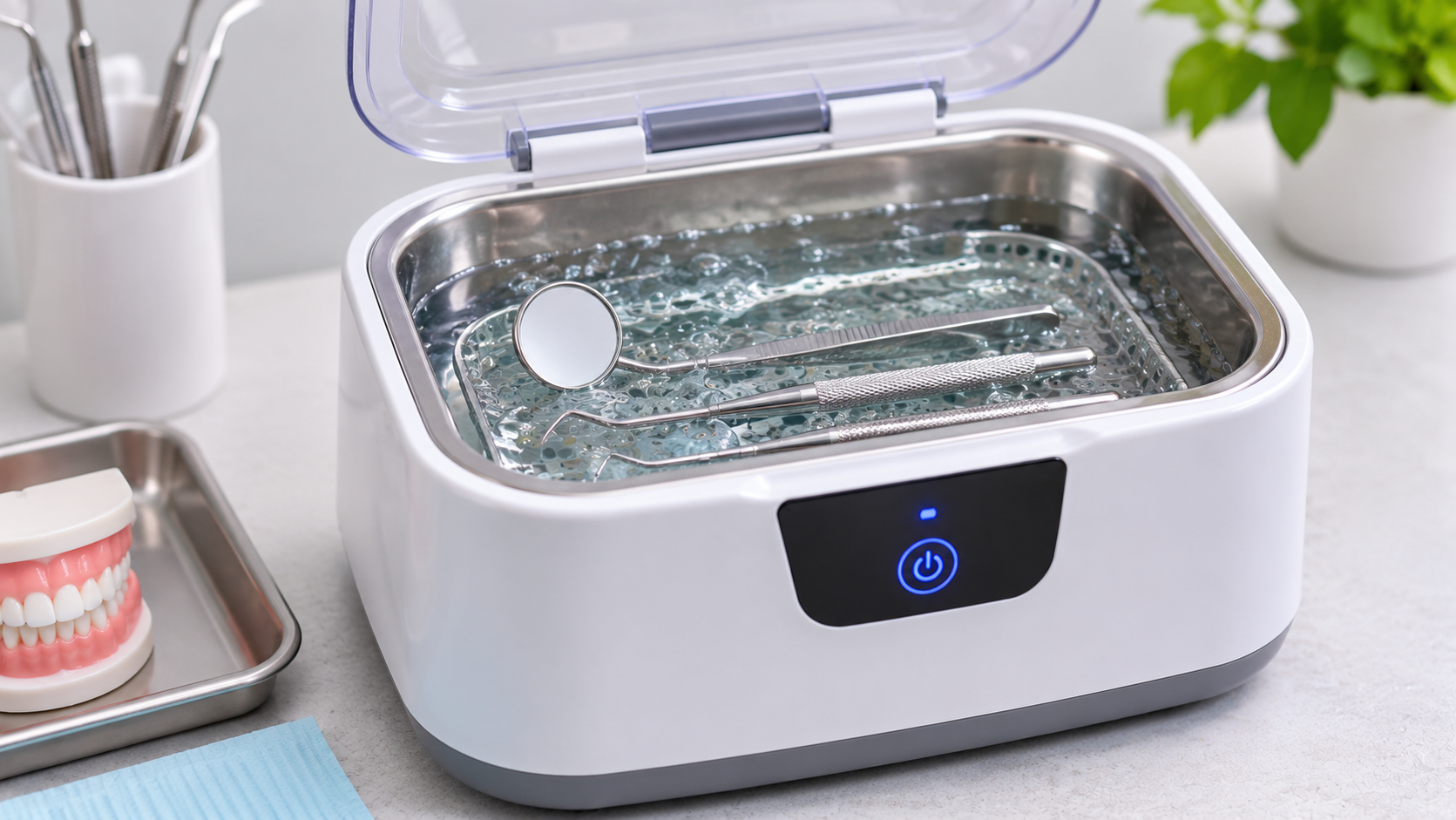
A dental ultrasonic cleaner is an advanced cleaning device designed to remove debris, contaminants, and unwanted deposits from compatible dental instruments and oral appliances. Using high-frequency sound waves, this technology provides an efficient alternative to traditional manual scrubbing.
From professional dental clinics to personal oral appliance care, ultrasonic cleaning devices offer a practical solution for maintaining cleanliness and hygiene.
What Is a Dental Ultrasonic Cleaner?
A dental ultrasonic cleaner is an electronic machine containing a tank filled with water and an appropriate cleaning solution. It uses ultrasonic vibrations to loosen contaminants from submerged objects.
Professional models are commonly used in dental practices, while compact household models are designed for cleaning compatible retainers, dentures, and mouthguards.
These devices can reach small gaps and difficult-to-access surfaces that may be challenging to clean manually.
How Does a Dental Ultrasonic Cleaner Work?
Ultrasonic cleaners operate through a scientific process called cavitation.
High-frequency sound waves generate microscopic bubbles within the cleaning liquid. These bubbles rapidly collapse, releasing energy that helps loosen dirt, organic material, and other deposits from submerged surfaces.
The cleaning process reduces the need for manual scrubbing. However, its effectiveness depends on the cleaning solution, equipment settings, and instrument compatibility.
Benefits of Dental Ultrasonic Cleaners
Ultrasonic cleaning technology offers several practical advantages:
- Effective cleaning: Helps remove debris from complicated surfaces and narrow spaces.
- Time efficiency: Reduces the amount of manual cleaning required.
- Improved workplace safety: Limits direct handling of contaminated dental instruments during cleaning.
- Convenience: Makes routine cleaning of compatible oral appliances easier.
- Versatility: Supports various dental cleaning applications when manufacturer instructions are followed.
Common Uses of Dental Ultrasonic Cleaners
Professional dental practices use ultrasonic cleaning machines for compatible instruments, including certain dental mirrors, scalers, forceps, and reusable accessories.
Compact household ultrasonic cleaners may also be suitable for:
- Dentures
- Clear aligners
- Orthodontic retainers
- Night guards
- Sports mouthguards
Always check whether your dental appliance is compatible with ultrasonic cleaning before using the device.
How to Choose the Best Dental Ultrasonic Cleaner
When purchasing an ultrasonic cleaner, consider its intended purpose, tank capacity, construction quality, and available cleaning settings.
A professional dental clinic typically requires equipment specifically designed for clinical instrument processing. Smaller household units may be sufficient for personal oral appliances.
Look for a durable stainless steel tank, automatic timer, removable cleaning basket, and clear operating instructions.
Selecting the correct cleaning solution is equally important because unsuitable chemicals can damage certain materials.
Cleaning and Maintenance Tips
Follow the manufacturer’s recommendations regarding cleaning cycles, water temperature, and suitable detergents.
Avoid overcrowding the cleaning tank, operating the machine without liquid, or using unauthorized cleaning chemicals.
Regularly replace the cleaning solution and maintain the tank according to the manufacturer’s instructions.
Does Ultrasonic Cleaning Sterilize Dental Instruments?
No. Ultrasonic cleaning removes debris but does not replace sterilization.
Professional dental instruments require appropriate sterilization or disinfection after cleaning, depending on their intended use and infection-control requirements.
Conclusion
A dental ultrasonic cleaner offers an efficient and convenient approach to cleaning compatible dental instruments and oral appliances. Its advanced cavitation technology helps remove unwanted deposits while reducing manual cleaning efforts.
Choosing suitable equipment, following operating instructions, and maintaining proper hygiene procedures can help achieve effective cleaning results in professional and household environments.